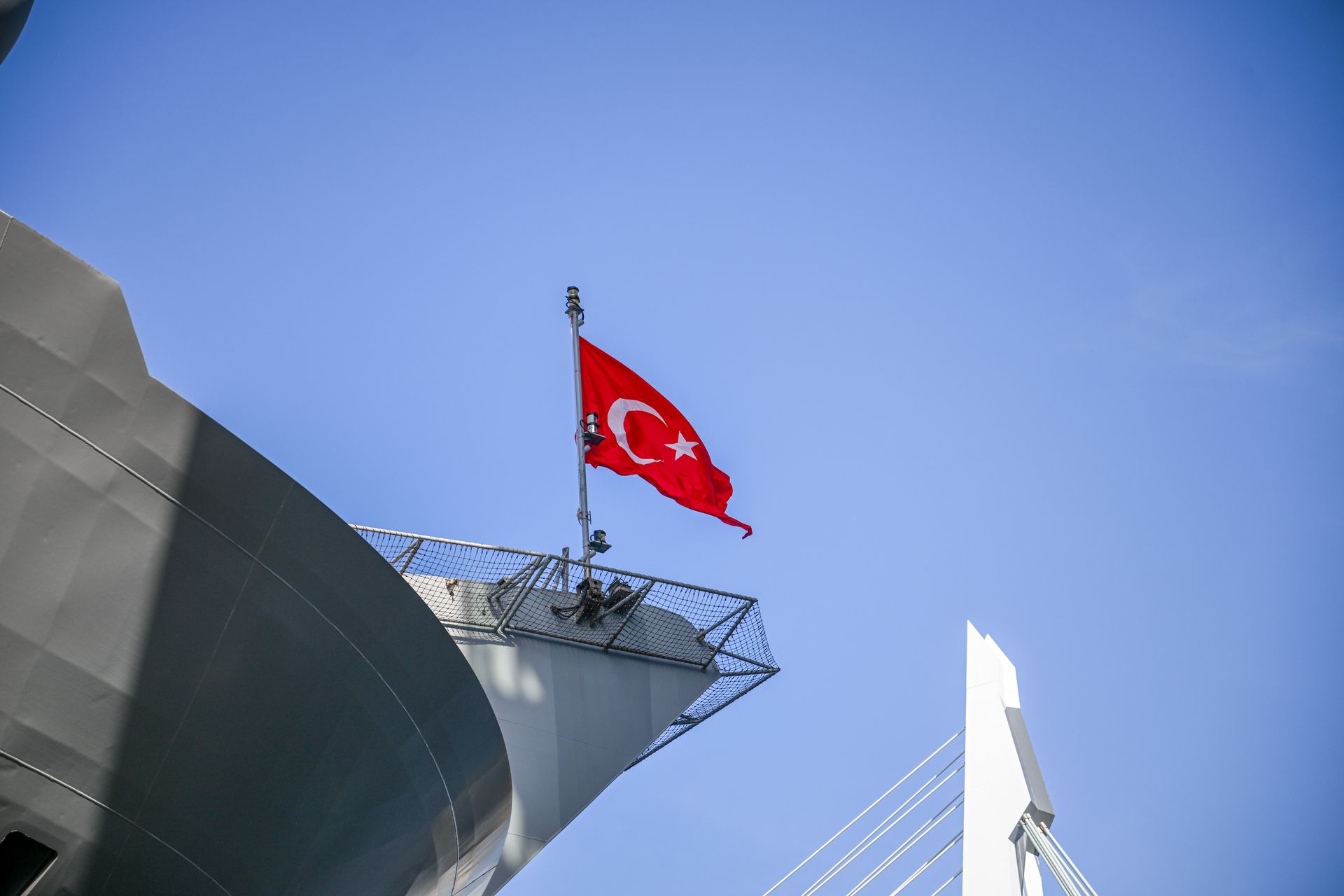
Turkiye's Skies Secured: NATO Air Defenses Counter Iran Missile Threat
In a period of escalating regional tensions, Turkiye's robust air defense systems, bolstered by NATO's collective might, have successfully intercepted an Iranian ballistic missile launched towards its territory. This incident, occurring over the Sahinbey district of Gaziantep in southern Turkiye, marks a critical demonstration of defensive capabilities and underscores the precarious security landscape in the Middle East. With no casualties or damage reported, the interception serves as a stark reminder of the volatile situation, particularly as the ongoing conflict involving the United States, Israel, and Iran continues to ripple across the region.
The Turkish Ministry of National Defence swiftly confirmed the iran missile intercepted, emphasizing Ankara's unwavering determination to protect its national airspace and border security. Beyond the immediate defense, Turkiye issued a strong call for de-escalation, urging all parties, especially Tehran, to refrain from actions that could endanger civilians or undermine regional stability. This incident is not isolated; it follows a similar interception of an Iranian ballistic missile heading towards Turkiye just weeks prior, signaling a disturbing pattern of aggression and increasing risks of a wider confrontation.
NATO's Unwavering Shield: Protecting Allies Against Ballistic Threats
The successful interception of the Iranian ballistic missile was a collaborative effort, with NATO air defenses playing a pivotal role. Allison Hart, a NATO spokesperson, confirmed the alliance's involvement, stating, “NATO stands firm in its readiness to defend all Allies against any threat.” This statement highlights the core principle of collective defense that underpins the North Atlantic Treaty Organization.
The interception, whether over Gaziantep or previously over the Eastern Mediterranean, is a tangible demonstration of NATO's advanced capabilities. These sophisticated air defense systems are designed to detect, track, and neutralize a wide array of aerial threats, including ballistic missiles that can travel at immense speeds and altitudes. The alliance's condemnation of such launches and its expression of "full solidarity" with Turkiye further cement its commitment to member states' security.
Central to NATO's defensive posture is Article 5 of its founding treaty, which stipulates that an attack on one member country is considered an attack on all. While NATO Chief Mark Rutte clarified that there was no discussion of invoking Article 5 after the first ballistic missile was shot down, the readiness to do so and the deployment of defensive assets showcase the alliance's unwavering commitment to its members. The presence and operational readiness of NATO's integrated air and missile defense systems provide a critical deterrent and a robust shield, ensuring the security of its populations against the evolving threats of ballistic missile proliferation. This capability is not just theoretical; the recent incidents have proven its practical effectiveness in preventing potential disaster on Turkish soil.
Iran's Escalation Calculus: Destabilization and Geopolitical Leverage
The repeated incidents of an iran missile intercepted are set against a backdrop of escalating regional tensions, with US-Israeli military actions against Iran reportedly prompting a wave of retaliatory Iranian missile and drone strikes. While Iranian authorities claim these strikes are in self-defense, targeting US military bases and Israel-linked assets across the region, a more complex and concerning strategy appears to be at play.
According to experts like Rob Geist Pinfold, a lecturer in defense studies at King's College London, Iran's targets extend far beyond military installations. Pinfold suggests that Tehran is primarily aiming for large-scale infrastructure and civilian targets, and this is "not a mistake. This is by design." The strategic objective, he argues, is to “unleash as much chaos as possible to destabilize the region and global markets” in an attempt to pressure Washington to abandon its current policies. This high-risk strategy is evident in Iran's willingness to target various Gulf Cooperation Council states, effectively burning bridges with regional neighbors in pursuit of its broader geopolitical goals. The implications of this approach are profound, extending beyond immediate security concerns to broader economic and political instability. For a deeper dive into this strategy, explore Iran's Missile Strategy: Destabilizing the Region, Targeting Civilian Zones.
This calculated destabilization creates a complex challenge for regional and international actors. The danger of miscalculation is ever-present, and the potential for these localized strikes to ignite a much wider conflict remains a significant concern. Understanding Iran's motivations, whether perceived self-defense or a deliberate campaign of chaos, is crucial for developing effective counter-strategies and de-escalation pathways.
Navigating the Perilous Waters: Regional Stability and the Path Forward
The repeated need for an iran missile intercepted highlights a grim reality: the Middle East is currently grappling with a severe security crisis. The fallout from the escalating conflict extends beyond Turkiye, impacting the broader Gulf region and raising global concerns about energy security and international trade routes. The economic consequences of sustained instability could be far-reaching, affecting global markets already under strain.
In this volatile environment, several practical considerations emerge for maintaining security and fostering stability:
- Strengthening Air Defense Networks: Nations vulnerable to ballistic missile threats must continue to invest in and integrate advanced air defense systems. Collaborative efforts among allies, like those within NATO, are paramount for sharing intelligence, resources, and best practices.
- Early Warning and Detection: Robust early warning systems, capable of rapidly detecting missile launches, are critical for maximizing interception opportunities and protecting civilian populations. This requires sophisticated radar and satellite technology.
- Diplomatic Engagement and De-escalation: Despite the current tensions, sustained diplomatic channels and efforts for de-escalation are essential. Regional and international bodies must actively mediate and encourage restraint from all parties to prevent further escalation.
- Protecting Civilian Infrastructure: Given Iran's alleged strategy of targeting civilian infrastructure, a renewed focus on fortifying critical national infrastructure against missile attacks is vital for national resilience.
Turkiye, situated at a strategic crossroads, plays a pivotal role in advocating for restraint and pursuing diplomatic solutions. Its firm stance on protecting its borders while simultaneously calling for an end to actions that undermine regional stability exemplifies the delicate balance required in this crisis. The international community must recognize the shared responsibility to prevent the situation from spiraling further out of control, emphasizing dialogue and collective security over military escalation.
Conclusion
The successful interception of Iranian ballistic missiles by NATO air defenses over Turkiye serves as a powerful testament to the alliance's readiness and capability in defending its members against emerging threats. It underscores Turkiye's critical role in regional security and its unwavering commitment to protecting its sovereignty. However, these incidents also lay bare the profound instability gripping the Middle East, driven by Iran's high-risk strategy of destabilization amidst broader conflicts. As tensions continue to simmer, the imperative for de-escalation, robust defensive measures, and concerted diplomatic efforts becomes more urgent than ever. The security of Turkiye's skies, now demonstrably secured by advanced air defense systems, is a beacon of resilience in a region desperately searching for peace and stability.